Mains-pressure hot water
Unvented cylinders deliver strong flow to every outlet at once, no pump, no loft tank, no waiting for the shower to build.
Gas Safe Reg. 638860|24-hour emergency cover, Essex & Suffolk
Vented & unvented cylinders
Mains-pressure hot water to every outlet at once, from a correctly sized cylinder installed and certified by a Gas Safe registered engineer whose registration covers vented and unvented cylinders and water heaters.
Gas Safe 638860 · Cylinders & water heaters covered · £2m public liability insurance
8 years in business
Eight years of gas and plumbing work
Gas Safe 638860
Full domestic scope
10/10 on Checkatrade
27 verified reviews
£2m public liability
Fully insured
6-month guarantee
On all workmanship
Service overview
A hot water cylinder stores heated water so it is available at full flow the moment you open a tap. That is what makes cylinders the right answer for homes with more than one bathroom, where a combi boiler heating water on demand will always be limited by the incoming mains flow rate.
There are two families of cylinder. Unvented cylinders are sealed and fed directly from the mains, so every outlet delivers at mains pressure, this is what gives a powerful shower without a pump. Vented cylinders are fed from a header tank in the loft and rely on gravity, which is cheaper to install but gives lower pressure upstairs.
Unvented systems are pressurised and therefore safety-critical: they carry expansion vessels, pressure relief and temperature relief devices, and a discharge arrangement that has to be installed and terminated correctly. This is G3 work, restricted to competent registered installers. Our Gas Safe registration 638860 explicitly covers vented and unvented cylinders and water heaters.
The cost of waiting
An unvented cylinder with a failed expansion vessel or a passing relief valve will show its symptoms quietly: a dripping discharge pipe, intermittent pressure surges, or hot water that varies without explanation. Those symptoms indicate that the safety devices are being asked to do work they are designed to do only as a last resort.
A leaking or corroded cylinder is a serious water damage risk. A cylinder holds a large volume of water in an airing cupboard, usually above a ceiling. When one fails properly, the resulting damage is invariably worse than the cost of replacing the cylinder would have been.
There is also a straightforward efficiency cost. Older, poorly insulated cylinders lose stored heat continuously into the cupboard, which means the boiler reheats more often to maintain temperature. Modern cylinders hold heat far better, so more of the gas you buy ends up in the shower rather than in the airing cupboard.
Our process
We measure incoming mains flow and pressure, count outlets and peak simultaneous demand, and check the available space and pipe routes.
Cylinder type, capacity, coil size and discharge route specified, and a free fixed quote issued, typically within 24 hours of the survey.
Old cylinder drained and removed, base prepared, and primary and secondary pipework set out for the new unit.
Cylinder installed with expansion vessel, pressure and temperature relief, tundish and correctly routed discharge pipework, plus controls and immersion where specified.
System filled, tested and commissioned, safety devices verified, documentation completed for warranty and compliance, and our 6-month workmanship guarantee applied.
What you get
Unvented cylinders deliver strong flow to every outlet at once, no pump, no loft tank, no waiting for the shower to build.
Stored hot water is what allows two showers to run at the same time without either turning cold or losing pressure.
Cylinder volume and coil matched to your household's peak demand and boiler output, so recovery time is realistic.
Gas Safe registration 638860 covers vented and unvented cylinders and water heaters, so the installation is competent and documented.
Converting from a vented system removes the header tank, freeing loft space and eliminating a common source of leaks and freezing.
6-month workmanship guarantee, £2,000,000 public liability insurance, and a 10/10 Checkatrade rating from 27 verified reviews.
In detail
An unvented cylinder is a sealed vessel fed at mains pressure. Because there is no atmospheric vent, expansion is absorbed by an expansion vessel or internal air gap, and the vessel is protected by a pressure relief valve and a temperature and pressure relief valve discharging through a tundish to a safe termination. The payoff is mains pressure at every outlet and no tanks in the loft.
A vented cylinder is open to atmosphere via a cold water storage tank, usually in the loft. Pressure at the taps depends on the height of that tank above the outlet, which is why top-floor showers on vented systems are often weak without a pump. Vented systems remain a sound choice where mains pressure is genuinely poor, and they are simpler and cheaper to install.
Where the incoming main is weak, an unvented cylinder will not create pressure that does not exist. In those cases the options are a vented arrangement, a pump, or an accumulator, and we assess that with actual flow and pressure figures at survey rather than assuming.
Cylinder capacity should be based on peak demand, how much hot water your household needs in its busiest hour, rather than a general rule. Undersize it and you run out mid-shower; oversize it substantially and you pay to keep water hot that nobody uses.
Recovery time depends on the coil surface area and the boiler output feeding it. A high-recovery coil on a system boiler reheats a cylinder considerably faster than an older low-surface coil, which matters far more in practice for a busy household than a slightly larger volume.
Cylinders can be heated by the boiler coil, by an immersion heater as backup, or by additional coils for solar thermal or a heat pump where those are present. Immersion heaters are worth specifying as a fallback: they keep hot water available if the boiler fails.
Unvented cylinders should be serviced annually. The service checks the expansion vessel charge, tests the relief valves, checks the tundish and discharge arrangement, inspects the immersion and thermostats, and confirms operating pressures. Manufacturers make this a condition of warranty.
The most common fault we find is a discharged or waterlogged expansion vessel, which shows up as pressure surges and a dripping tundish. Left alone, the relief valve is repeatedly asked to relieve pressure it was never intended to handle routinely, and it eventually passes permanently.
Scale is the other factor in harder water areas: it reduces coil efficiency and can affect immersion elements over time. Where scale is an issue, we will discuss treatment options as part of the specification rather than after the cylinder is in.
We install and replace cylinders in Braintree, Colchester, Kelvedon, Tiptree, Feering, Halstead, Sudbury, Sible Hedingham, Coggeshall and the surrounding villages. A very common job in this area is converting a vented, tank-fed system in an older house into an unvented arrangement when a second bathroom or en-suite is added.
Cylinder work usually pairs with boiler and heating work, since the boiler is the heat source and its output determines recovery. Where both are due, doing them together avoids paying twice for the same access and the same drain-down.
Local coverage
Based in Earls Colne, Colchester. See the full service area map or read verified customer reviews.
Recent work
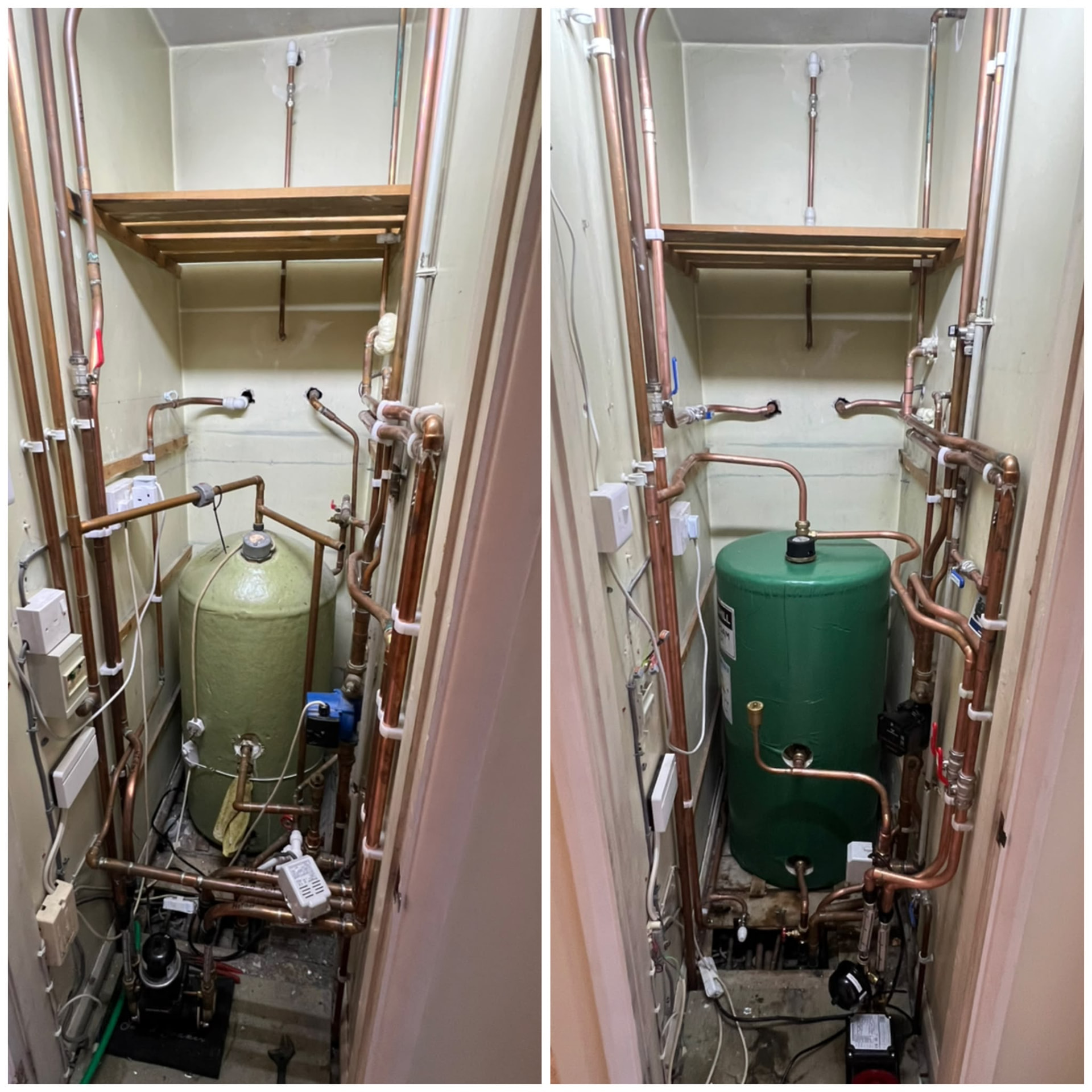
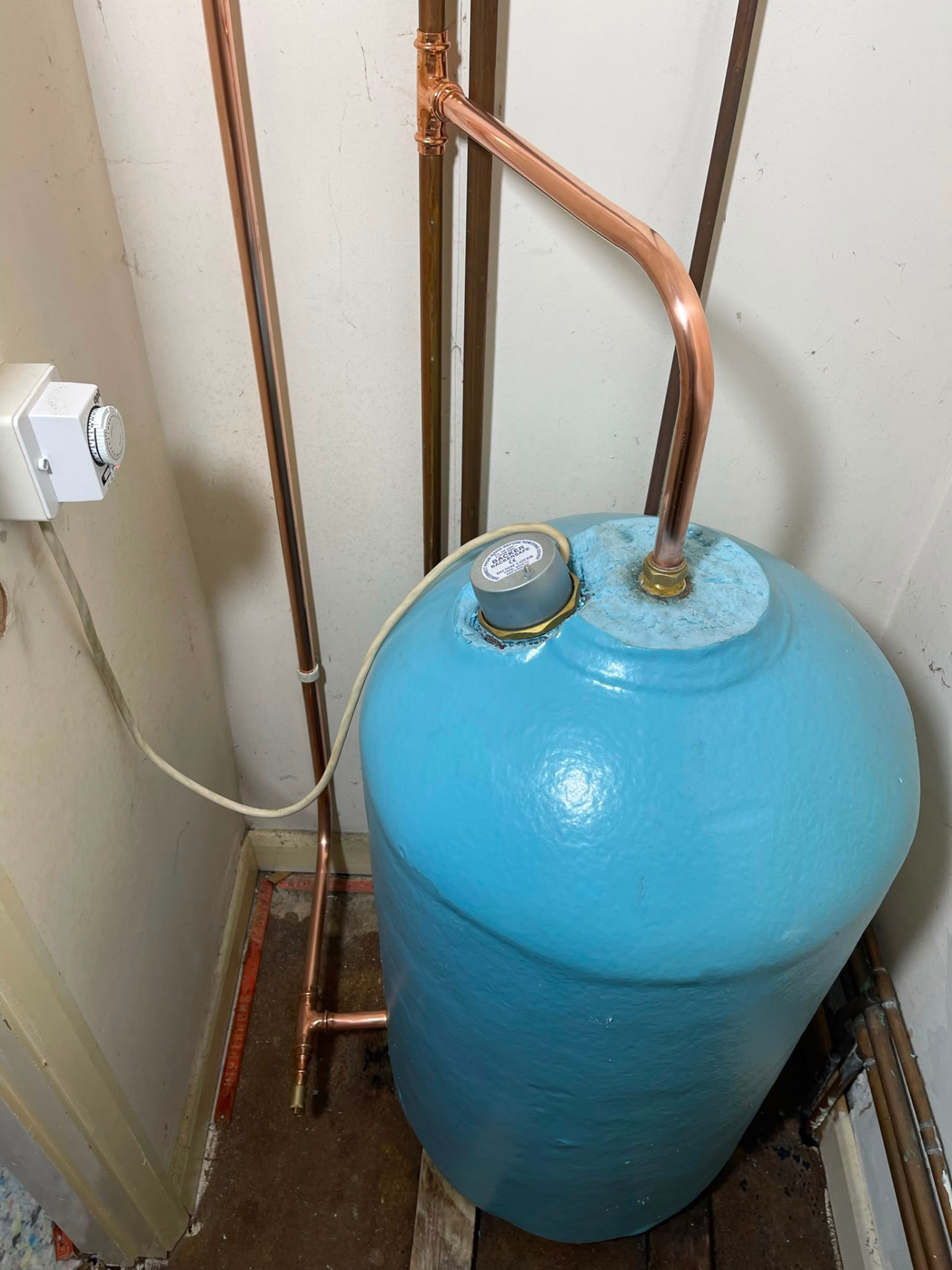
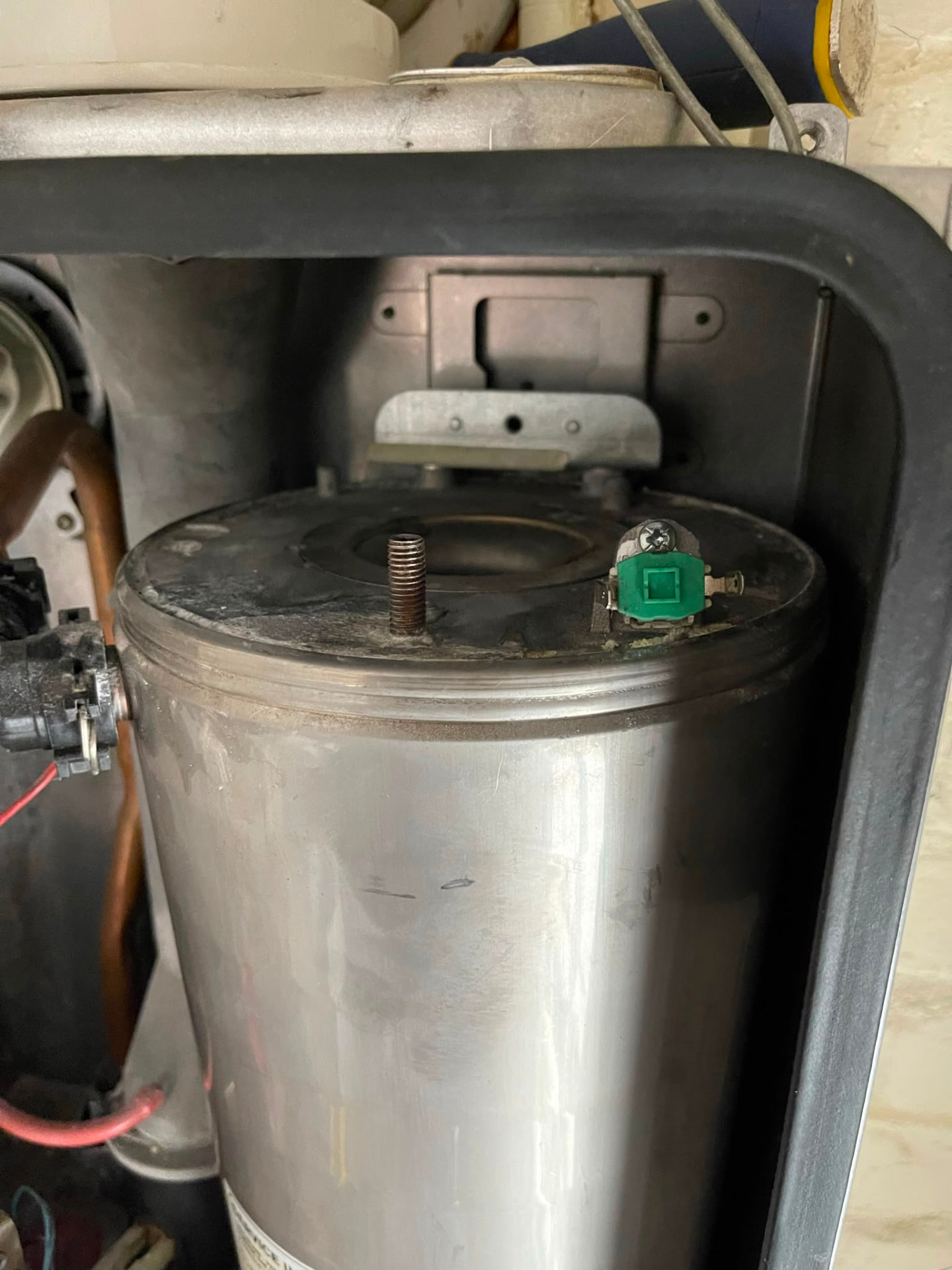
Photographs from real hot water cylinders jobs completed across Essex and Suffolk. More on the our work page.
Questions
Something not covered here? Call 07984 042373: the 24-hour line is usually answered personally by Matt.
It is quoted per property, based on cylinder size and specification, the pipework and discharge route, and whether the system is being converted from vented. The survey and fixed quote are free and typically returned within 24 hours.
A straight replacement in the same position is usually a one-day job. Converting a vented system to unvented takes longer because pipework, controls and discharge routing all change; your quote sets out the expected duration.
Yes. Unvented hot water work (G3) requires specific competence, and our Gas Safe registration 638860 covers vented and unvented cylinders and water heaters as well as domestic pipework and boilers.
It gives you mains pressure at every hot outlet, so if your incoming main is good the improvement is significant. If the incoming main itself is weak, no cylinder can create pressure that is not there, which is why we measure flow and pressure before recommending anything.
It depends on your peak simultaneous demand, bathroom count, shower types and household routine, plus the boiler output feeding the coil. We size it against that rather than against the cylinder that happens to be there now.
Annually. The service checks expansion vessel charge, tests the relief valves and discharge arrangement, and confirms the controls and thermostats. It is also a manufacturer warranty condition.
That usually means a relief valve is passing or the expansion vessel has lost its charge. It should be investigated rather than ignored, because those valves are safety devices, not everyday pressure controls.
A modern cylinder that is serviced annually, with its expansion vessel maintained and any scale issues managed, gives many years of service. Neglected expansion vessels and untreated scale are what shorten that life.
Converting to an unvented system removes the cold water storage tank and the feed and expansion tank, which frees loft space and removes a common source of leaks and freezing. It requires an adequate incoming main, which we check first.
Yes, along with Kelvedon, Tiptree, Feering, Halstead, Sudbury, Sible Hedingham, Coggeshall and the surrounding Essex and Suffolk villages.
Next step
Free survey with actual mains flow and pressure figures, a fixed quote within 24 hours, and G3-competent installation covered by our Gas Safe registration.
Call 07984 042373